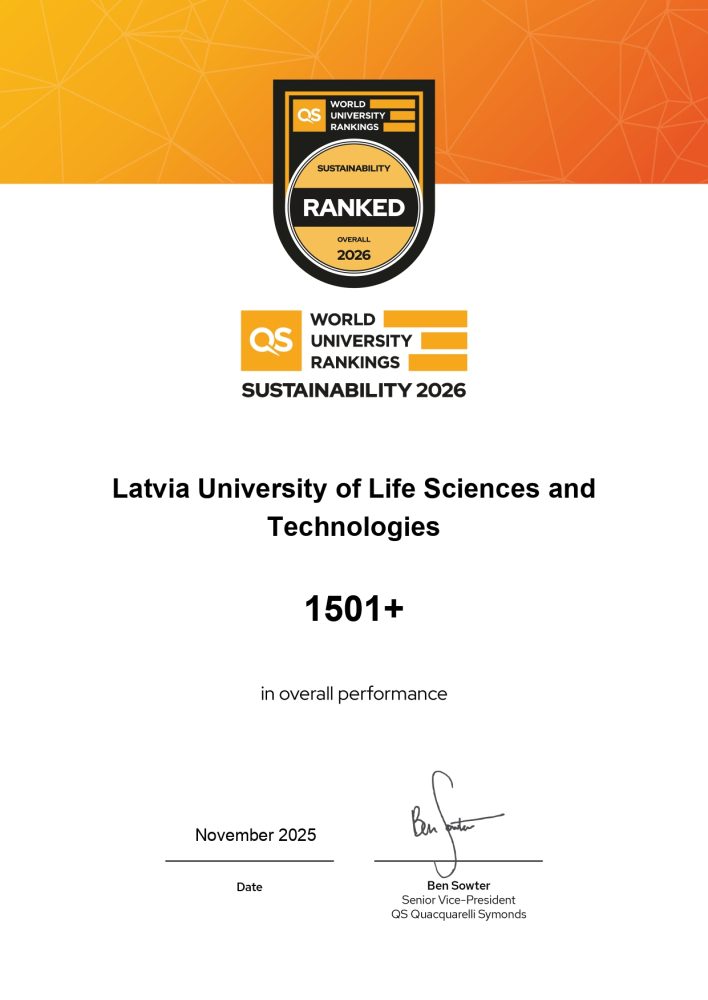
LBTU Maintains Strong Standing in QS World University Sustainability Rankings

Last week, the latest results of the QS World University Rankings: Sustainability 2026 were published. The Latvia University of Life Sciences and Technologies (LBTU) has once again been ranked among the world’s universities evaluated in terms of sustainability. In total, 2002 universities worldwide were analysed, including 621 European universities and 4 higher education institutions from Latvia.
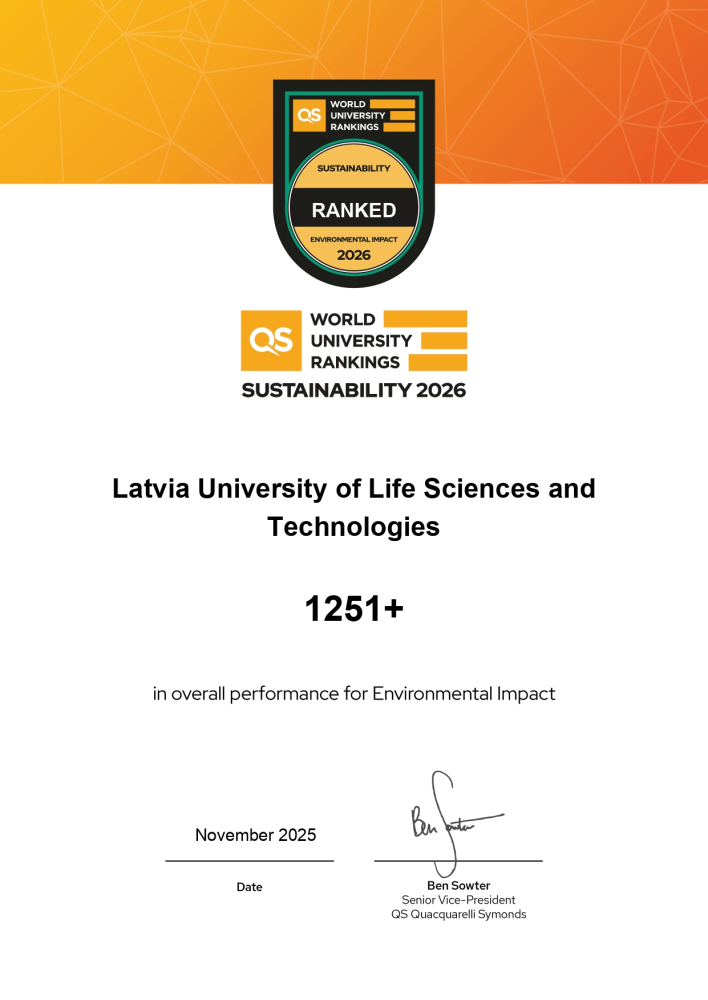
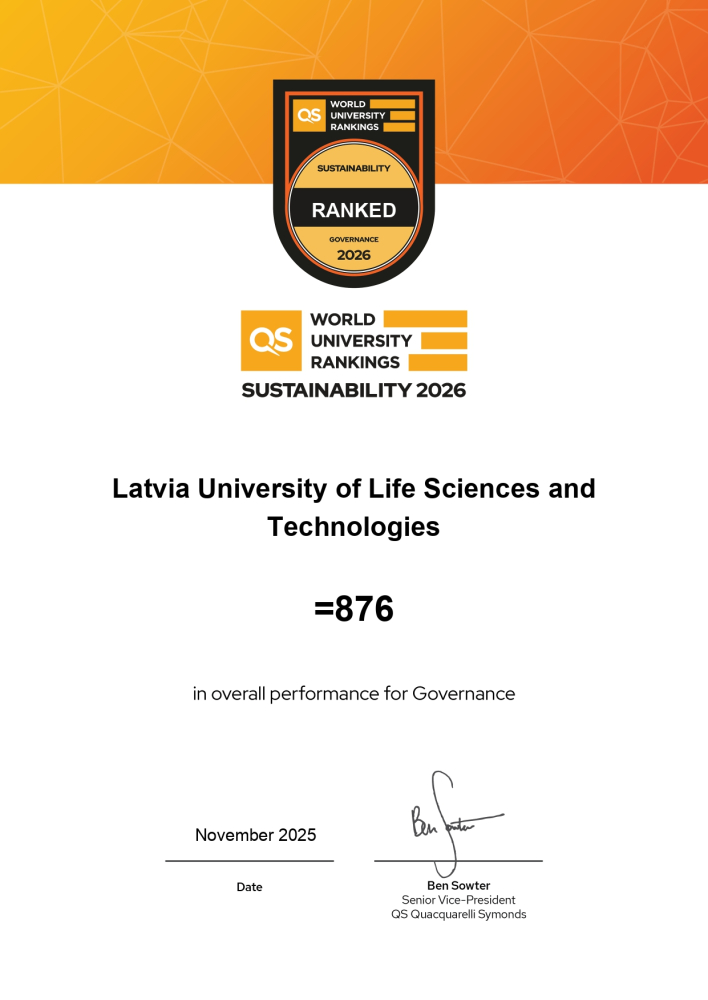
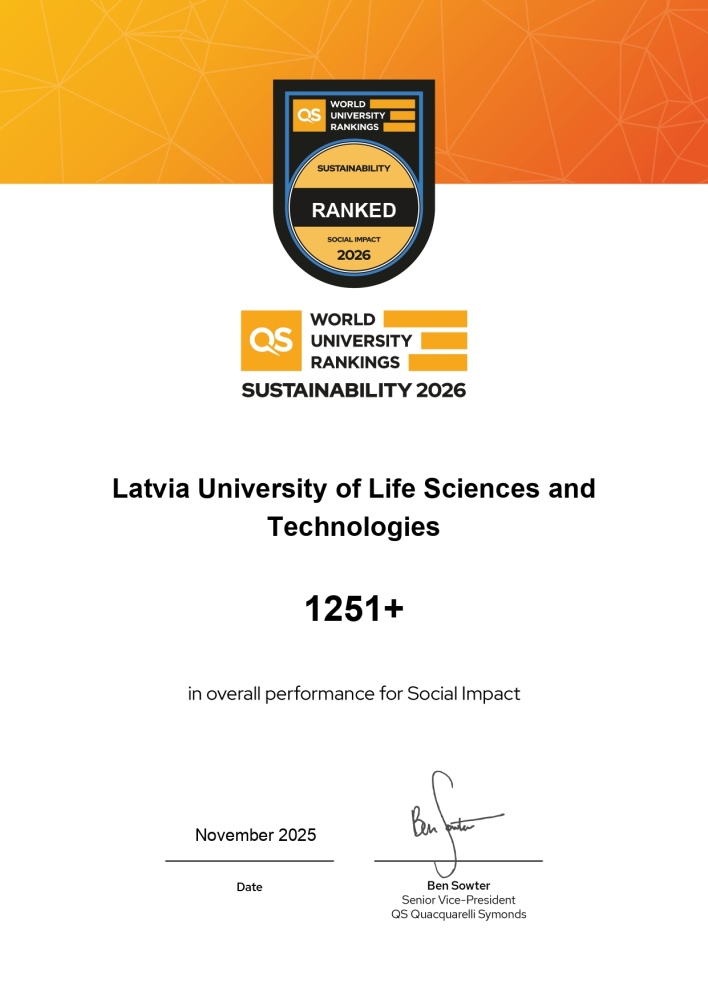
In the QS World University Sustainability Rankings, universities are assessed in three main categories: Environmental Impact (Environmental Education, Environmental Research, and Environmental Sustainability), Social Impact (Employment and Opportunities, Equality, Health and Well-Being, Educational Impact, and Knowledge Exchange), and Governance (Good Governance, Ethics, Transparency, Hiring, and Decision-Making). LBTU’s strongest results in 2026 are in Environmental Impact, where the university earned 54.0 points (851st place), and in Governance, with 68.7 points (876th place).
Compared to the 2025 results, LBTU maintains steady performance in Environmental Impact and Governance in 2026, while also improving its Social Impact indicators. The strongest Social Impact indicators are Knowledge Transfer (45.0 points), Health and Well-Being (44.3 points), and Equality (41.1 points), reflecting the university’s active contribution to society, student and community well-being, educational quality, and the promotion of equality.
In the Environmental Impact category, LBTU demonstrates consistent performance, particularly in Environmental Education with 54.0 points, highlighting the university’s strong contribution to the academic environment and the development of sustainable thinking.
The Governance score (68.7 points) exceeds the global median (60.3 points), reflecting transparent decision-making, solid institutional structures, and a high level of ethics.
LBTU is one of Latvia’s leading multidisciplinary science universities specializing in the sustainable use of natural resources. Research at the university and associated scientific institutes is conducted in three main areas – life sciences, engineering sciences, and social sciences. Research is closely integrated into the university’s academic programs, extending across bachelor’s, master’s, and doctoral study programs.